
E-Bike Buying Guide
There’s an e-bike for everybody! We’re sharing some tips as you decide which bike fits your lifestyle best.
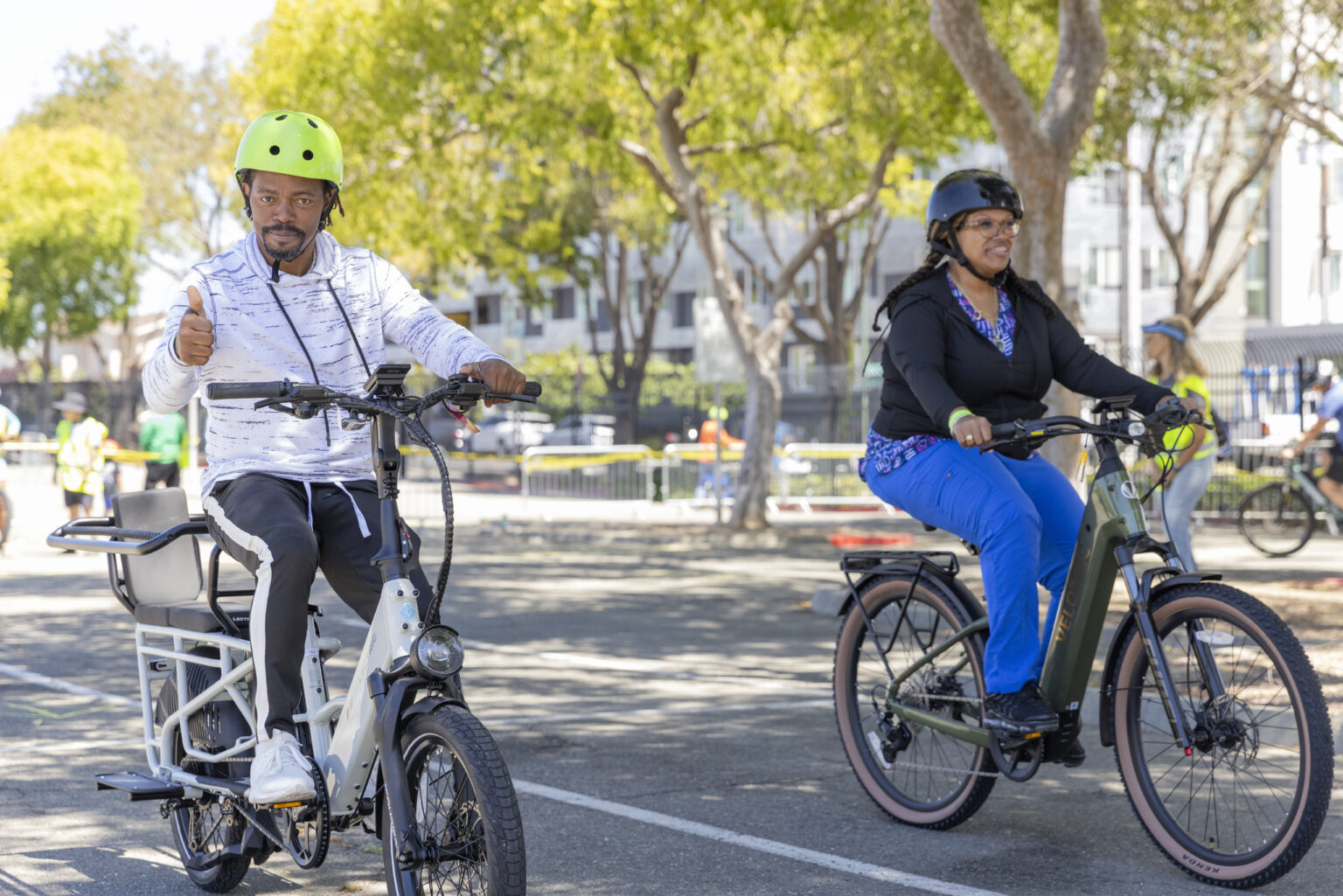
Our Top Tips
-
Buy your e-bike from a local bike shop; close to you is better.
-
Only purchase a Class 1, 2, or 3 e-bike, not an e-moto.
-
Consider up-front costs as well as maintenance costs.
-
Consider where you’re likely to ride, and what kind of riding you’ll do.
E-Bike Basics
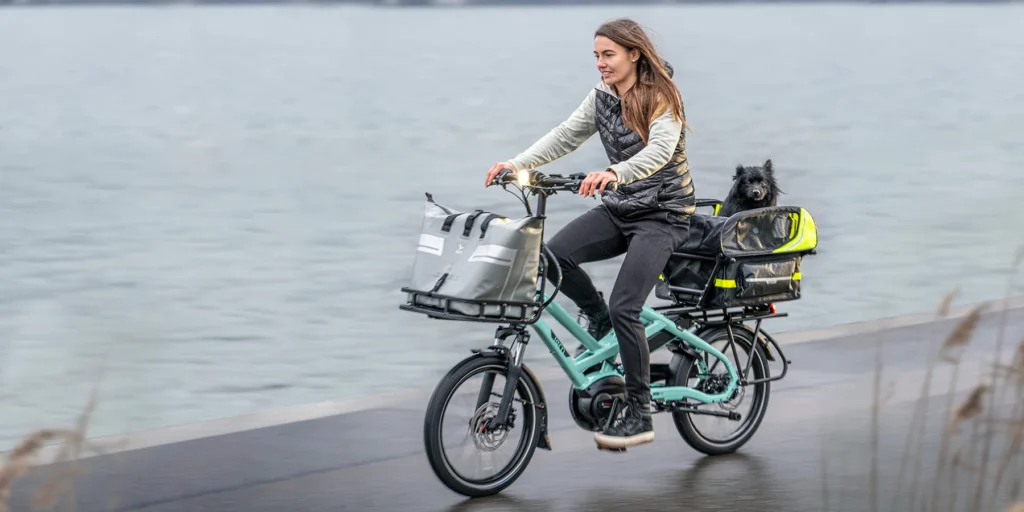
- Pedal-assist only
- Max speed 20 MPH
- Can typically be used anywhere regular bikes are allowed*
- No age restriction
- No license / registration
- Helmet required if under 18
*(other local trail or sidewalk restrictions may apply)
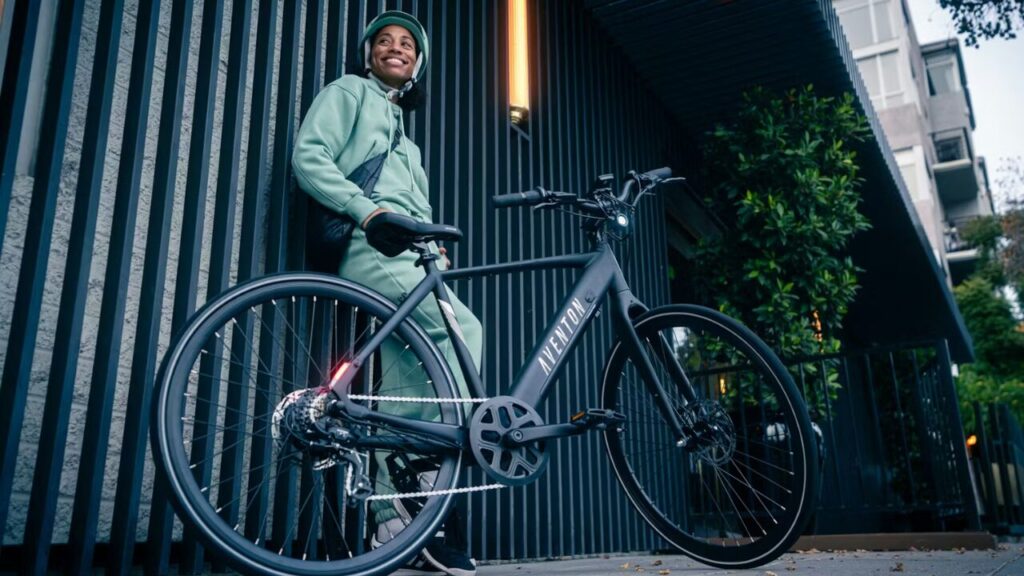
- Throttle operated or pedal-assist
- Max speed 20 MPH
- Can typically be used on roadways and most paved trails* (per East Bay Parks trails rules)
- No age restriction
- No license / registration
- Helmet required if under 18
*(other local trail or sidewalk restrictions may apply)
- Pedal-assist only
- Max speed 28 MPH
- Can typically be used on paved roadways but not on most paved or unpaved trails* (per East Bay Parks trails rules)
- Ages 16 and up only
- No license / registration
- Helmet required for all ages
*(other local trail or sidewalk restrictions may apply)
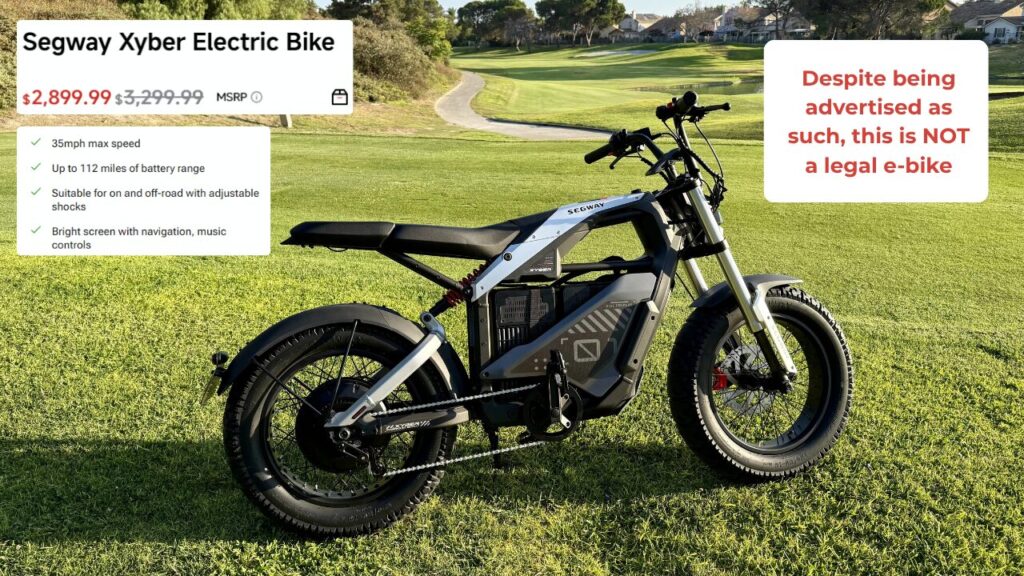
- Can travel faster than 28 MPH
- Requires a drivers license
- Has an associated age limit (and are NEVER for kids under 16)
- Some have state registration and license plate requirements
- They usually fall under the same category as e-scooters and e-mopeds
No e-device that goes faster than 20 MPH is permitted for youth under 16 years old.
However, some non-street legal devices have been promoted incorrectly as e-bikes, and some e-bikes can have their speed governor disabled illegally, either with an app, or with modification to the hardware.
If you are shopping for a device for your child under 16, it is your responsibility to ensure they are using it safely and legally.
E-bikes vs E-motos
E-Motos are not street legal devices. However, some non-street legal devices have been promoted incorrectly as e-bikes, and some e-bikes can have their speed governor disabled illegally, either with an app, or with modification to the hardware.
Starting in 2027, any device with an engine power greater than 750 watts is not an e-bike, nor is any device that exceeds the 20-mph throttle or 28mph pedal assist limits. These devices will not be able to be marketed as e-bikes.
What’s your budget?
An e-bike is a significant purchase, treat it the same as you would with other large purchases. Find a bike that is high-quality within your price range that is repairable by a local bike shop and will last a long time. An e-bike can be a car replacement, and compared to average operating costs on a car, even a high-end e-bike is likely to save you money.
“Inexpensive” e-bikes can be more expensive in the long run. Some e-bike brands use proprietary parts that can be hard to source, especially if the brand goes out of business – look for brands that have been around a while and be sure to purchase your bike from a reputable bike shop.
Don’t sacrifice safety to save money:
- Make sure the battery on your e-bike is UL certified. This requires the battery be lab tested for safety. Not having this certification risks overheating and even fires
- UL 2271 (for standalone batteries) are mandatory by law for all new e-bikes sold in California
- Hydraulic disc brakes are the gold standard for e-bikes, which are heavier and faster. Mechanical brakes wear out faster, which leads to reduced braking performance.
Apply for rebates and incentive programs
- Ava Bike Electric (Alameda County & San Joaquin County only)
- 511 CCTA Electric Bicycle Rebate Program(Contra Costa County only)
- Clean Cars for All (all Bay Area)- the Clean Cars for All program offers qualifying Bay Area residents the option to dismantle their old car in exchange for $7,500 in grant funding to use on public transit and for the purchase of an electric bicycle (e-bike) and bike accessories. You may combine these mobility options to best suit your mobility needs (e.g. $1,700 for an e-bike and $5,800 for public transit).
Consider buying a used e-bike
- Still follow all of the recommendations above, even when purchasing a used e-bike. Do your research on legal e-bike brands and what bike shops will service your e-bike.
- Search the e-bike’s serial number or other identifying information on Bike Index to make sure it isn’t stolen
- There are some companies, like Upway, where you can buy certified pre-owned e-bikes
- Check the drivetrain for wear, including the chain and shifting.
- Look for significant scratches, rust, or other signs the bike has not been well cared for.
- Check the mileage and ask if they can share the e-bike’s service history. Bike shops often keep a record of the service history on bikes.
- Ask questions like “why are you selling this e-bike?” for a vibe check.
What other costs should I expect?
Helmet
- A helmet is required for anyone riding a bike under the age of 18, whether or not it is an e-bike
- E-bikes have more power and can go faster than an acoustic bike, a helmet is highly recommended for your safety
- Everybody must wear a helmet on Class 3 e-bikes, regardless of age
- Invest in a higher-quality helmet to protect your head
Lights
- Many e-bikes come with integrated lights, but not always. California light requirements:
As of 2026, e-bikes must have a rear red reflector or red light with a built-in reflector visible from 500 ft— required at all times, day or night. (CVC 21201) - White or yellow pedal reflectors, can also be on foot or ankle
- White headlamp, visible from 300 ft on the front and sides
- Front and rear side reflectors, white or yellow on spokes, tires, or elsewhere
Locks
- Buy a good lock; u-locks or heavy chain locks are best
- Expect to spend $100-$300 on a high quality lock
Brake Pads
They wear out more quickly on e-bikes.
E-bike Components
- Fat tires may be more expensive to replace and sometimes hard to source.
- Hub motor flats can be more challenging or expensive to repair.
Choosing Your E-bike
What kind of riding do you plan to do?
Commuting, Errands, Casual Riding
Often folks find a more upright e-bike, with higher handlebars, and slightly wider tires to be the most comfortable for this type of riding
Recreation
- Road e-bikes are designed for speed on well-paved roads. They have skinnier tires and the handlebars are often lower so that the rider leans forward, and can offer multiple hand positions.
- Mountain e-bikes are designed for rough, off-road riding. They often have larger tires with larger tread, suspension, and flat handlebars to handle bumps and obstacles on the trail.
- Gravel e-bikes are more similar to road bikes but with more upright handlebars and wider tires. These bikes are designed for mixed terrain, from smoother roads to gravel surfaces.
Hauling Cargo
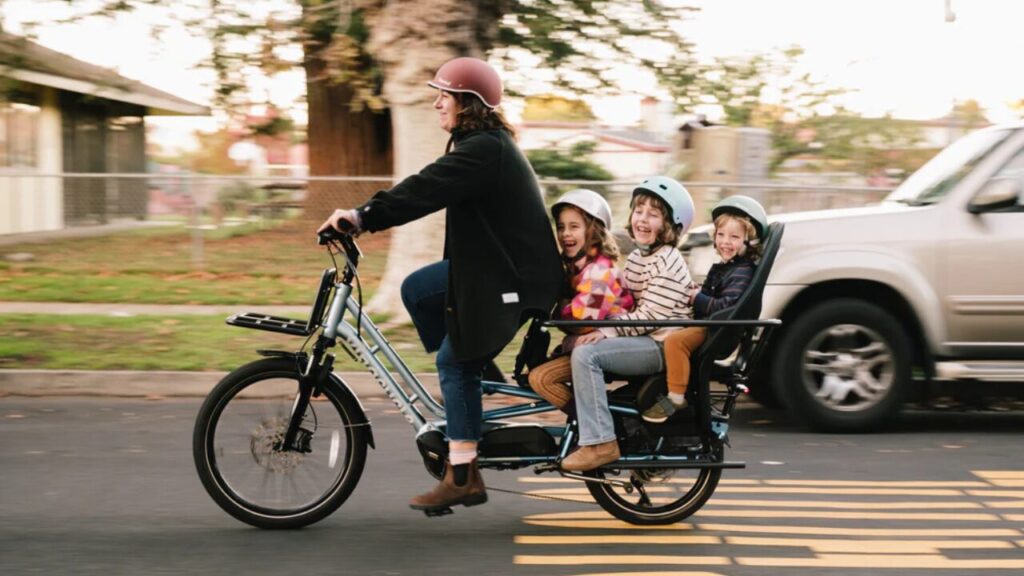
- Longtail e-bikes have an extended back section for carrying passengers or cargo
- Bakfiets, box bikes, or front loader e-bikes have a large box in the front of the bike for carrying passengers or cargo
- If you’re planning to use a trailer, make sure the e-bike is compatible. Hub motors can be especially challenging if trying to attach a trailer.
- Check how much weight the bike is rated to carry and how much weight the rack is rated for.
Transporting Kids
- Many of the cargo e-bikes detailed above are designed for carrying passengers.
- You do not need to purchase a cargo e-bike to ride with your child, but make sure the bike is rated for enough weight to hold a passenger
- Younger kids need safety seats like the Yepp seat
- If you need to attach a passenger seat to, make sure it is compatible with the seat
- Try out the e-bike with a seat with your own kids; plan for some growth
Biking that matches my ergonomic/mobility needs
- Recumbent e-bikes have the rider lay down with their feet forward. This can be more comfortable for folks with ergonomic concerns with an upright bicycle.
- Adaptive e-bikes are specialty devices that are designed to serve riders with a variety of disabilities and needs. Bike types include handcycles, recumbent trikes, side-by-side tandems, among others.
- BORP Adaptive Cycling Center in Berkeley hosts one of the largest collections of adaptive bikes in the world and offers adaptive bike rentals
- Tricycle/Trike e-bikes have three wheels. It is a great option for folks with balance concerns. These bikes can tip more easily if taking turns faster, so ride cautiously when making sharp turns.
Long Distances, Climbing Power
Mid-drive bikes generally have much larger ranges than hub-motors as well as having more efficient climbing power
Multi-modal
Heavy or long bikes or bikes with large tires can be difficult to get onto a bus rack or to get onto BART. You can check BART elevator dimensions to see if your bike might fit. They can be brought up on most BART escalators. Please exercise caution and yield to pedestrians.
- A folding e-bike can be a great option for easier use with transit or if you don’t have secure locking options at your home or workplace
Where do you plan to ride?
In the hills
You may need more robust brakes, more assist, or a throttle. You will also deplete your batter faster if traveling uphill.
Across long distances
If you’ve got a longer ride, or your ride lacks bike infrastructure, a slightly faster Class 3 bike might be something to consider.
There are limitations for class 3 e-bikes on bikeways and park trails, including the Ohlone Greenway, Bay Trail, Iron Horse Trail, and Contra Costa Canal Trail.
With transit
If you plan to use BART or another transit system, make sure you check size and weight restrictions on e-bikes first (i.e. not all e-bikes fit into BART elevators, some e-bikes are too heavy to lift onto Capitol Corridor, and the ferry has some restrictions.
Which size bike should you get?
- Bike shops will help you find the right fit
- Sizing Video: https://m.youtube.com/watch?v=1VYhyppWTDc
- Not all e-bikes will fit people under X or over X height
Specific tips for…
Purchasing e-bikes for children
- Only Class 1 and 2 e-bikes (max speed 20 mph) are legal for children under the age of 16 to ride.
- All children under the age of 18 must wear a helmet on any bike
- You and your child should both test ride the e-bike to make sure it’s appropriate for your child’s skill level and confidence.
Seniors + People interested in adaptive bikes
- Adaptive e-bikes are specialty devices that are designed to serve riders with a variety of disabilities and needs. Bike types include handcycles, recumbent trikes, side-by-side tandems, among others.
- BORP Adaptive Cycling Center in Berkeley hosts one of the largest collections of adaptive bikes in the world and offers adaptive bike rentals
Thanks for reading! (One Quick Plug)
Our staff put this free guide together, pulling from our own real-life experiences to help make e-bike shopping a little less overwhelming. If you’re finding it helpful, the best way to say “thanks” is to drop your email below. It lets us know there’s interest in deep-dive guides like this, and you’ll be added to our email list so you can receive updates on our upcoming e-bike classes, the latest e-bike laws in the East Bay, and more.
Who’s going to service your e-bike?
Shops often won’t work on e-bike brands they don’t carry, especially if they are direct-to-consumer brands only sold online.
Look for a shop close to you and build a relationship with them; it may be difficult to get your bike to a far away shop if it needs service.
Other Considerations
- Your e-bike may exceed the weight limit on conventional car racks. You may need a heavy duty rack or large cargo capacity. Mobile bike service options exist, but they are more expensive.
- Bikes with bench seats can be more difficult to find service for, as they may not fit in standard bike mechanic stands.
Where are you going to store the bike?
- Storing any bike indoors protects it from the elements and makes it harder to steal.
- If you store your e-bike in the garage, you may want to consider also locking it to a solid anchor point. If your battery is removable, you may also consider storing/charging it separately.
- If you don’t have a garage but have access to an outdoor space you can explore a ground anchor and bike cover
- If you live in a building with a bike room, make sure you still lock your bike with a strong lock
- If you want or need to keep your e-bike inside your home, a folding e-bike may be a good option. Make sure to test the folding mechanisms to be sure it’s easy for you to use.
- If you’ll need to carry the e-bike up stairs to where you will store it, consider weight and size when choosing an e-bike
- If you don’t have power near where you’ll park the e-bike, you may want to consider an e-bike with a removable battery. Many e-bikes come with integrated batteries so the entire e-bike will need to be plugged in to charge.
- If your e-bike has the option to include a cafe lock on the rear wheel, consider this add-on. It can be an added theft deterrent when used with another secure lock (as it prevents the bike from being rolled) or as a short-term locking system when bike racks aren’t readily available.
Go test ride e-bikes!
Don’t buy an e-bike you haven’t tested: bike shops will typically let you leave collateral like your ID with them while you go out on a short (half hour or so) bike ride, and many will let you take the bike for longer if you talk with them about it first.
Test-riding e-bikes is a great way to see if you like the bike shop; do they treat you with respect, answer your questions, and make you feel welcome?
- For long-term loans: The City of Oakland offers an Electric Bike Lending Program including reduced rates for income qualified residents
- For short-term trials: Lyft Bikes offers e-bikes in Oakland, Berkeley, Emeryville, and in 2027…Alameda!
If the e-bike will be for your child, you should both test ride it and make sure it’s appropriate for your child’s skill level and confidence. Class 3 e-bikes are only allowed for people over the age of 16.
Protecting Your Bike
- Buy a good lock; u-locks or heavy chain locks are best. Expect to spend $100-$300 on a high quality lock.
- BikeLink lockers are a more secure option at many transit hubs in the Bay Area, however, many e-bikes don’t fit into their standard lockers, extra large lockers are available at some locations.
- Bike Station (Oakland & Berkeley) offers free and secure weekday bike parking
- Consider e-bike insurance; check with your homeowners or renters insurance if they will cover your e-bike, or consider separate e-bike-specific insurance.
- Consider bicycle roadside assistance for help in transporting your e-bike to a local shop if the bike isn’t rideable
- Register your bike on BikeIndex. Having registration info on file means that you will be able to make a police report if your bicycle is stolen, and it allows you to flag it as stolen so that anyone who finds it can let you know. Individuals can even Google search your bike’s serial number to find out if it is listed as stolen or not
Which e-bikes are the Bike East Bay staff riding?
- Kelly, Bike Education co-Manager: Tern GSD so I can carry my husband and dog at the same time!
- Jill, Co-Executive Director of People and Operations: Urban Arrow (box bike) and Tern HSD. We bought adapters for the Urban Arrow so we could carry around our newborn in a car seat. Now that he’s older, he also rides in a Yepp seat on the HSD.